
TEL:0086-013902412326,0086-013924555598
In which industrial fields are high-temperature fans applied?
Author:Guangdong WUSHI Fan.,LTD.
Click:
Time:2025-09-12 13:20:38
In which industrial fields are high-temperature fans applied?
High temperature fan is a special type of fan that can operate stably in high temperature environments above 300 ℃. Its core function is to transport, pressurize or divert gases (such as smoke, hot air, high-temperature process gases, etc.) under high temperature conditions. Compared with ordinary fans, the design of high-temperature fans needs to focus on breaking through technical difficulties such as high temperature resistance, heat deformation resistance, corrosion resistance (under some working conditions), and long-term stability. Therefore, there are significant particularities in material selection, structural design, and performance parameters.
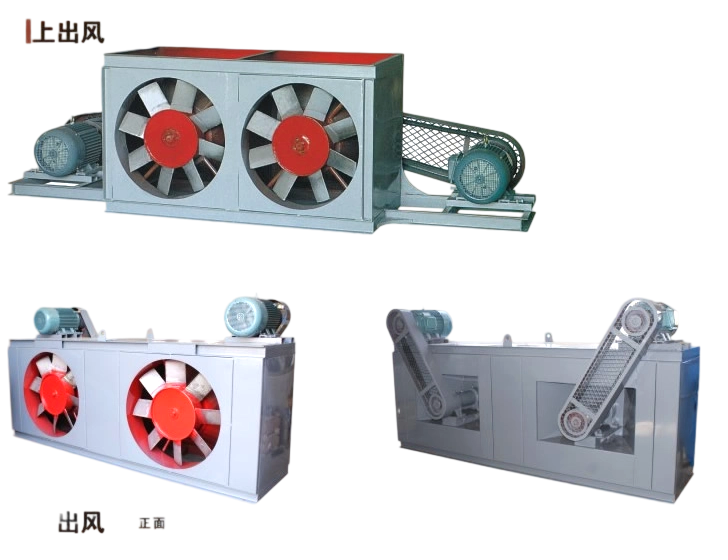
1、 Core characteristics of high-temperature fan
The application of high-temperature fans relies on their unique design, with core features including:
Wide temperature resistance: The conventional temperature resistance range is 300-1200 ℃ (special customization can exceed 1500 ℃), and it needs to be designed according to specific working conditions (such as instantaneous maximum temperature and continuous operating temperature);
Material compatibility: The main material needs to be resistant to oxidation and thermal fatigue. Common choices include:
Metal materials: high-temperature resistant alloys (such as nickel chromium alloy, Inconel nickel alloy), heat-resistant steels (such as 310S, 2520);
Non metallic materials: ceramics (wear-resistant and corrosion-resistant), high-temperature coatings (such as aluminum based and silicon-based high-temperature resistant coatings);
Sealing and lubrication: High temperature grease (resistant to temperatures of 200-600 ℃) or mechanical seals (such as metal bellows seals) are used to avoid lubrication failure;
Structural anti deformation design: Reduce component expansion/contraction stress caused by high temperature through symmetrical structure and thermal compensation devices (such as elastic supports and expansion joints), avoiding deformation of impellers and casings;
Cooling system integration: Key components such as bearings and motors need to be equipped with cooling devices (water cooling, air cooling) to prevent component damage caused by high temperature conduction;
Suitable for complex media: It can handle high-temperature gases containing dust (such as kiln flue gas) and corrosive components (such as chemical high-temperature exhaust gas), and requires wear-resistant and anti-corrosion design (such as impeller hardening treatment and anti-corrosion coating).
2、 Analysis of Typical Application Fields of High Temperature Fans
The application scenarios of high-temperature fans are concentrated in industrial processes that require the treatment of high-temperature gases. The specific design of fans is determined by the differences in operating conditions (temperature, medium characteristics, pressure requirements, etc.) in different industries. The following is a detailed analysis of the main application areas:
1. Industrial kiln field (high-temperature core scenario)
Industrial kilns (ceramics, glass, metallurgy, refractory materials, etc.) are the main application scenarios for high-temperature fans, which need to deal with high-temperature flue gas or process gases at 500-1200 ℃.
Ceramic industry:
Applied to exhaust smoke at the kiln tail and blow air at the kiln head of tunnel kilns and roller kilns. The exhaust fan at the kiln tail needs to handle flue gas (including ceramic dust) at 800-1000 ℃, requiring temperature resistance and wear resistance; The kiln head blower fan needs to transport hot air at 400-600 ℃ (for assisting combustion or drying the billet), ensuring stable air pressure to maintain temperature uniformity inside the kiln.
Glass industry:
In the float glass production line, the extraction of tin bath exhaust gas (including tin vapor, high-temperature flue gas, temperature 600-800 ℃) and the transportation of flue gas from the melting furnace waste heat recovery system rely on high-temperature fans. Due to the corrosive nature of tin vapor, the fan impeller needs to undergo anti-corrosion treatment (such as aluminum coating).
Metallurgical industry:
The hot blast stove of the ironmaking blast furnace requires a high-temperature fan to transport hot air (supporting coke) at 800-1200 ℃; The exhaust fan of the steel rolling heating furnace needs to handle flue gas (including iron oxide dust) at 700-900 ℃, and the wear-resistant design of the impeller needs to be strengthened (such as welding wear-resistant alloy).
2. Energy and power sector (utilization of high-temperature exhaust gas/waste heat)
In energy production, high-temperature fans are used to process high-temperature flue gas generated during combustion or power generation, while supporting the operation of waste heat recovery systems.
Garbage incineration power generation:
The temperature of the flue gas emitted from the garbage incinerator is 600-800 ℃ (containing corrosive components such as hydrogen chloride and dioxins), which needs to be introduced into the flue gas purification system (such as the deacidification tower) by a high-temperature fan; At the same time, the high-temperature steam generated by the waste heat boiler needs to be driven by a fan, which should be temperature resistant to 400-500 ℃ and corrosion-resistant (such as using duplex stainless steel material).
Biomass power generation/coal-fired power plants:
The exhaust temperature of biomass boilers (burning straw and sawdust) is 500-700 ℃ (containing alkali metal salt dust, prone to scaling), and the high-temperature fan needs to be regularly cleaned of the impeller to avoid blockage; The induced draft fan of coal-fired power plant boilers needs to process flue gas at 100-300 ℃ (in reality, due to the pre desulfurization and denitrification process, the temperature decreases, but some old units still reach 300-400 ℃), requiring high air pressure (to overcome flue resistance).
Waste heat recovery system:
In the waste heat power generation system of cement kilns and steel plants, the high-temperature fan is responsible for introducing the 400-600 ℃ waste heat flue gas discharged from the kiln into the waste heat boiler. It is necessary to accurately control the air volume to match the steam production, so a variable frequency speed control device is required.
3. Chemical and New Materials Industry (High Temperature Reaction and Drying)
In chemical production, processes such as high-temperature reactions and material drying require the treatment of high-temperature process gases (often containing corrosive components).
Chemical reaction process:
High temperature reactors (temperature 300-500 ℃) for chemical plants such as ammonia and methanol synthesis require high-temperature fans to transport reaction gases (such as hydrogen and nitrogen gas mixtures); The boiling roasting furnace for sulfuric acid production requires a fan to extract sulfur-containing flue gas (SO ₂) at 800-900 ℃. Due to the strong corrosiveness of sulfur vapor, the fan needs to use acid resistant steel (such as 316L).
High temperature drying process:
The drying of chemical raw materials (such as fertilizer and resin) requires high temperature hot air (300-500 ℃). The high temperature fan is responsible for sending hot air to the dryer (such as spray drying tower). It is necessary to ensure the air volume is stable to control the drying rate and avoid overheating and deterioration of materials.
4. Environmental Protection and Waste Gas Treatment (High Temperature Waste Gas Purification)
In the field of environmental protection, high-temperature fans are used for the collection and purification of high-temperature exhaust gases, especially for organic exhaust gases that require 'high-temperature incineration' treatment.
VOCs high-temperature incineration (RTO):
When treating organic waste gas in a thermal storage incinerator (RTO), the combustion chamber temperature is 800-1200 ℃. The high-temperature fan needs to introduce the high-temperature flue gas (including CO ₂ and water vapor) after incineration into the thermal storage body (to recover heat), or directly discharge it (after cooling). Due to large temperature fluctuations (with a temperature difference of up to 1000 ℃ during start-up and shutdown), the fan needs to adopt a thermal compensation structure (such as an elastic coupling) to avoid component deformation.
Hazardous waste treatment:
The flue gas emitted from the incinerator of medical waste and industrial hazardous waste has a temperature of 600-900 ℃ (containing heavy metals and toxic gases). The high-temperature fan is responsible for sending the flue gas into the rapid cooling tower (cooling to avoid dioxin regeneration), which needs to be temperature resistant and have good sealing properties (to prevent toxic gas leakage).
3、 Key considerations for the application of high-temperature fans
In practical applications, the selection and operation of high-temperature fans should focus on the following issues based on the characteristics of the operating conditions:
Temperature parameters: It is not only necessary to clarify the 'continuous operating temperature', but also to consider the 'instantaneous maximum temperature' (such as temperature fluctuations during kiln start-up and shutdown). Generally, the fan design temperature resistance needs to be 50-100 ℃ higher than the actual maximum temperature to leave a safety margin;
Medium characteristics: If the gas contains dust (such as kiln flue gas), the dust concentration needs to be calculated (ordinary wear-resistant design can be selected when ≤ 30g/m ³, and enhanced wear resistance is required when > 30g/m ³, such as ceramic plates attached to the impeller); If it contains corrosive components (such as HCl, SO ₂), it is necessary to match anti-corrosion materials (such as Hastelloy alloy, PTFE coating);
Energy consumption and efficiency: In high-temperature environments, gas density decreases (shaft power decreases at the same air volume), but the fan's own heat dissipation increases energy consumption. Therefore, it is necessary to choose high-efficiency impellers (such as backward wing impellers) and match them with variable frequency control to reduce operating costs;
Maintenance requirements: The bearings and seals of high-temperature fans are vulnerable parts (affected by high-temperature aging), and a structure that is easy to maintain (such as a detachable casing) needs to be designed. High temperature lubricating grease (such as molybdenum disulfide based grease) should be replaced regularly.
IV. Summary
High temperature fans are the 'power core' in industrial high-temperature processes, and their performance directly affects production efficiency, energy consumption, and safety. With the upgrading of industries (such as new energy and materials) and the increasing environmental requirements (such as high-temperature exhaust gas purification), high-temperature fans are developing towards higher temperature resistance (above 1500 ℃), more resistance to complex media (strong corrosion, high dust), and intelligence (online temperature/vibration monitoring). In applications, it is necessary to accurately match fan parameters and materials based on the temperature, medium, and pressure requirements of specific industries in order to achieve stable and efficient operation.

Guangdong Wushi Fan Co., Ltd.
TEL:0086-757-81263018, 013336414696
FAX:0086-757-8126309
Website:https://www.industrial-fan.top
QQ:3834825849
E-mail:wushifengji@126.com

WeChat online customer service

